18 Results for "

Podocarpus nakaii Hayata

" in MedChemExpress (MCE) Product Catalog:
Products (18)

18 Results for "Podocarpus nakaii Hayata" in MCE Product Catalog:

14
14 Cited Publications
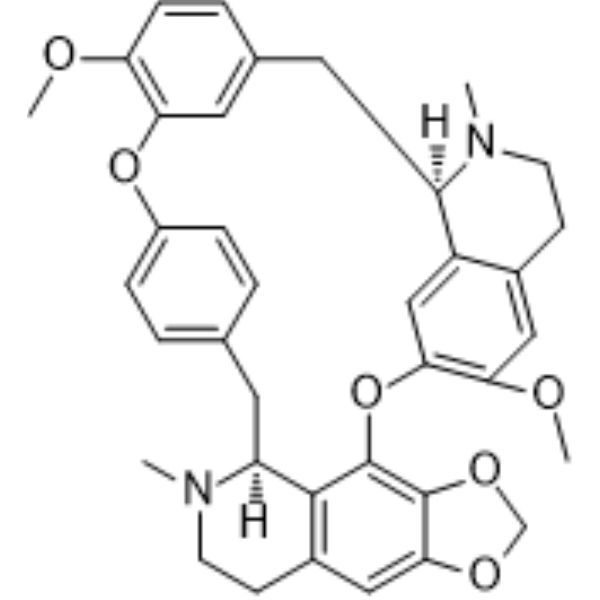
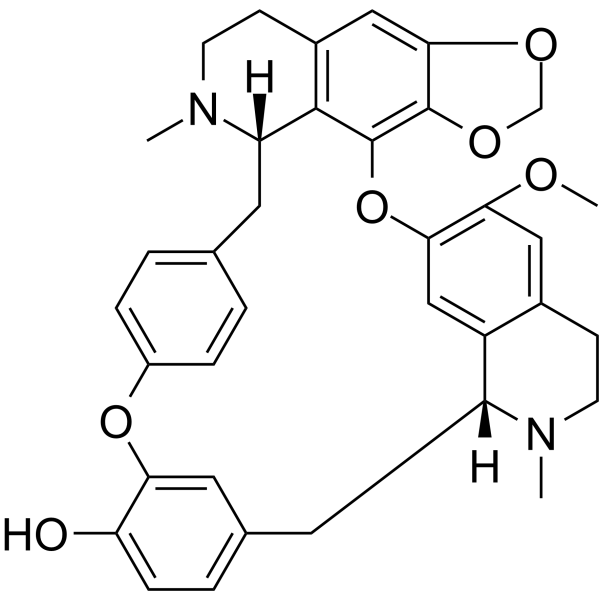
Cat. No.: HY-N6972
CAS No.: 481-49-2
Cepharanthine is a natural product that can be isolated from the plant Stephania cephalantha Hayata. Cepharanthine has anti-severe acute respiratory syndrome coronavirus 2 (anti-SARS-CoV-2) activities. Cepharanthine has good effective in suppressing viral proliferation (half maximal (50%) inhibitory concentration (IC50) and 90% inhibitory concentration (IC90) values of 1.90 and 4.46 μM . Cepharanthine can also effectively reverses P-gp-mediated multidrug resistance in K562 cells and increase enhances the sensitivity of anticancer agents in xenograft mice model . Cepharanthine shows inhibitory effects of human liver cytochrome P450 enzymes CYP3A4, CYP2E1 and CYP2C9. Cepharanthine has antitumor, anti-inflammatory and antinociceptive effects .
loading...
    loading...
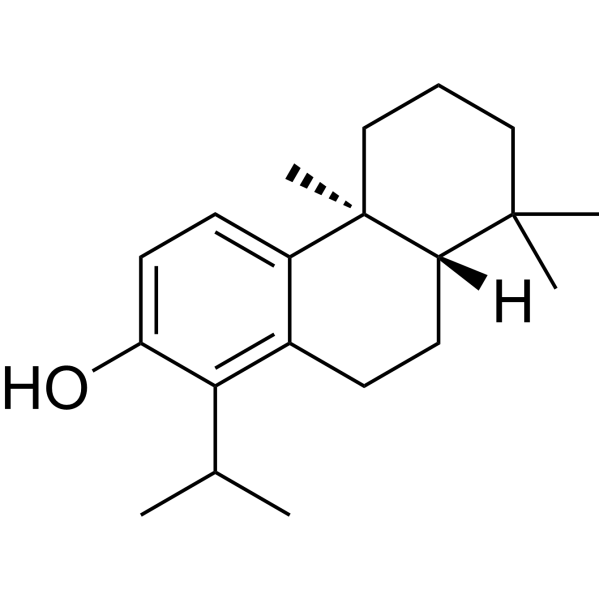
Cat. No.: HY-N1136
CAS No.: 511-15-9
(+)-Totarol is a diterpenoid membrane-disrupting agent and membrane structure regulator found in plants of the genus Podocarpus spp. (+)-Totarol inserts into phospholipid model membranes, disrupts phospholipid packing, and impairs the functional integrity of membranes. (+)-Totarol exhibits antibacterial activity against a variety of bacterial species and β-lactam-resistant strains, and its action is associated with changes in membrane physical properties. (+)-Totarol can be used in studies related to bacterial infections .
loading...
    loading...
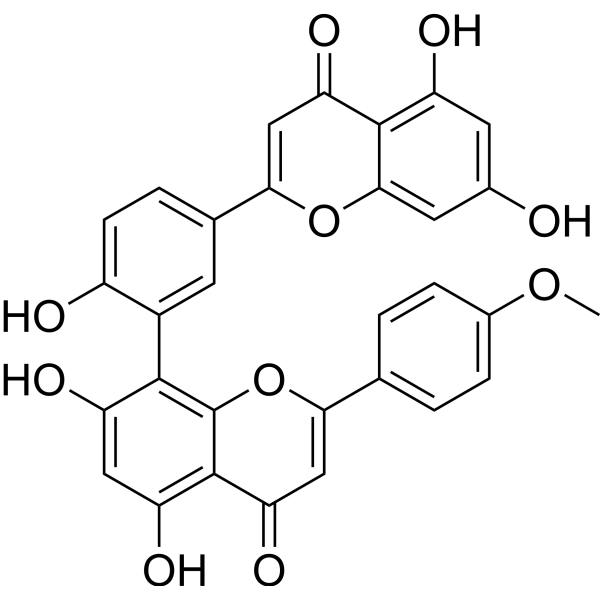
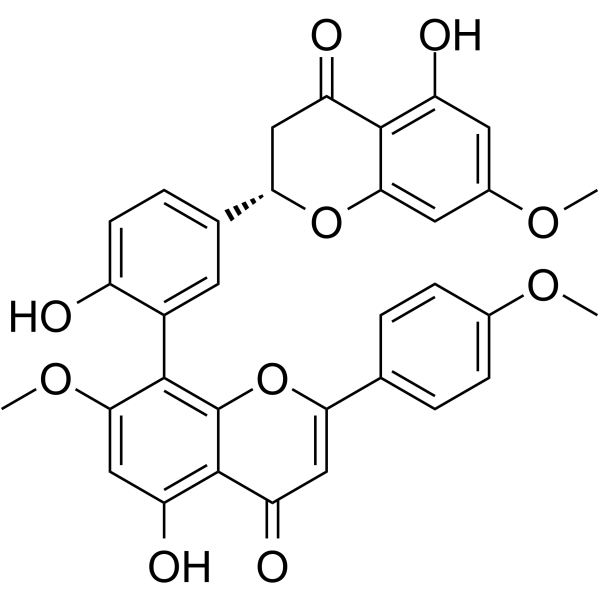
Cat. No.: HY-N2198
CAS No.: 22136-74-9
Podocarpusflavone A is a biflavonoid present in the leaves of Podocarpus henkelii, with anti-tumor, topoisomerase I inhibitory, antibacterial and antifungal activities. Podocarpusflavone A exhibits antibacterial activity against Enterococcus faecalis and Pseudomonas aeruginosa. Podocarpusflavone A shows weak activity against fungal pathogens. Podocarpusflavone A targets topoisomerase I and induces cell cycle arrest and apoptosis in MCF-7 cells. Podocarpusflavone A can be used for studies on cancer, bacterial and fungal infections .
loading...
    loading...
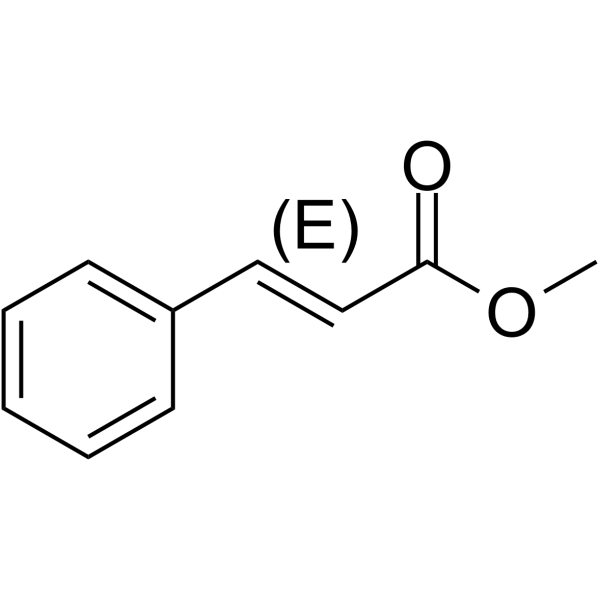
Cat. No.: HY-W067056
CAS No.: 1754-62-7
Synonyms: Methyl (E)-3-phenylpropenoate
Methyl (E)-cinnamate (Methyl (E)-3-phenylpropenoate) is a natural flavor compound with anti-inflammatory properties found in Alpinia katsumadai Hayata. Methyl (E)-cinnamate induces apoptosis via reduced anti-apoptotic protein expression, increased TUNEL-positive cells, and apoptotic morphological changes. Methyl (E)-cinnamate can be used for the research of abnormalities of osteoblast function in bone diseases .
loading...
    loading...
Cat. No.: HY-N8239
CAS No.: 27686-34-6
Cepharanoline is a compound isolated from Stephania cepharantha Hayata. Cepharanoline has proliferative activities .
loading...
    loading...
Cat. No.: HY-N1656
CAS No.: 110382-42-8
Target:  

Others

Research Areas:  

Others

Podocarpus flavanone is a natural product that can be isolated from Podocarpus taxifolia .
loading...
    loading...
Cat. No.: HY-N2672
CAS No.: 545-24-4
Synonyms: 5-Glutinen-3-ol
Glutinol (5-Glutinen-3-ol) is a Diterpenoids product that can be isolated from the heartwoods of Podocarpus macrophyllus .
loading...
    loading...
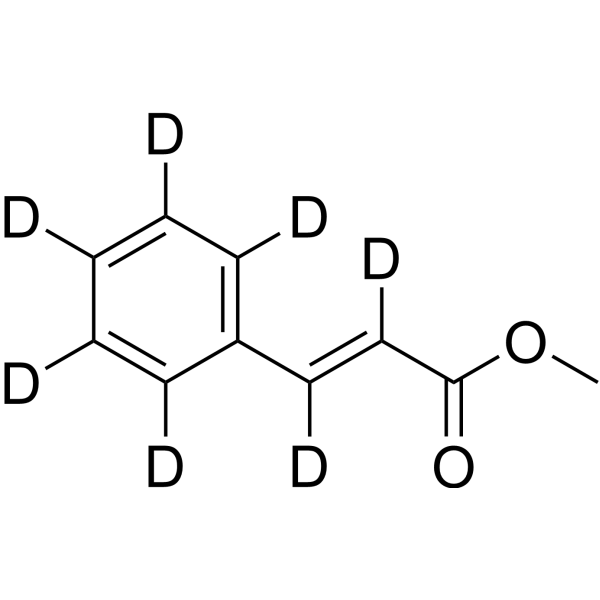
Cat. No.: HY-W067056S1
CAS No.: 2022152-96-9
Synonyms: Methyl(E)-3-phenylpropenoate-d7
Methyl(E)-cinnamate-d7 is the deuterium labeled Methyl (E)-cinnamate. Methyl (E)-cinnamate (Methyl (E)-3-phenylpropenoate) is a natural flavor compound with anti-inflammatory properties found in Alpinia katsumadai Hayata. Methyl (E)-cinnamate induces apoptosis via reduced anti-apoptotic protein expression, increased TUNEL-positive cells, and apoptotic morphological changes. Methyl (E)-cinnamate can be used for the research of abnormalities of osteoblast function in bone diseases .
loading...
    loading...
Cat. No.: HY-N6972R
CAS No.: 481-49-2
Cepharanthine (Standard) is the analytical standard of Cepharanthine. This product is intended for research and analytical applications. Cepharanthine is a natural product that can be isolated from the plant Stephania?cephalantha?Hayata. Cepharanthine has anti-severe acute respiratory syndrome coronavirus 2 (anti-SARS-CoV-2) activities. Cepharanthine has good effective in suppressing viral proliferation (half maximal (50%) inhibitory concentration (IC50) and 90% inhibitory concentration (IC90) values of 1.90 and 4.46?μM . Cepharanthine can also effectively reverses P-gp-mediated multidrug resistance in K562 cells and increase enhances the sensitivity of anticancer agents in xenograft mice model . Cepharanthine shows inhibitory effects of human liver cytochrome P450 enzymes CYP3A4, CYP2E1 and CYP2C9. Cepharanthine has antitumor, anti-inflammatory and antinociceptive effects .
loading...
    loading...
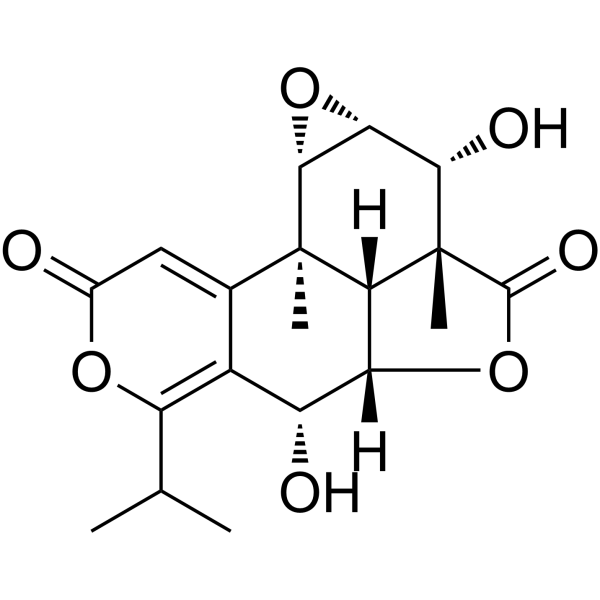
Cat. No.: HY-N3215
CAS No.: 24338-53-2
Nagilactone C is a diterpene dilactone compound isolated from Podocarpus neriifolius. Nagilactone C has potent antiproliferative activity against human fibrosarcoma and murine colon carcinoma tumor cell lines .
loading...
    loading...
Cat. No.: HY-N3575
CAS No.: 1000995-48-1
Synonyms: Chloramultilide C
Henriol A (Chloramultilide C) is a Lignans product that can be isolated from the heartwoods of Juniperus formosana Hayata. .
loading...
    loading...
Cat. No.: HY-N2791
CAS No.: 5309-35-3
9,13-Epidioxy-8(14)-abieten-18-oic acid is a Diterpenoids product that can be isolated from the heartwoods of Podocarpus macrophyllus .
loading...
    loading...
Cat. No.: HY-N8044
CAS No.: 935276-32-7
Ebracteolatain A is a phloroglucinol derivative found in the roots of Euphorbia ebracteolata Hayata .
loading...
    loading...
Cat. No.: HY-N17512
CAS No.: 2348408-80-8
Matairesinol-4'-O-glucoside is a natural product that can be found in podocarpus macrophyllus.
loading...
    loading...
Cat. No.: HY-N3900
CAS No.: 101312-79-2
Tsugacetal is a Lignans product that can be isolated from the heartwoods of Juniperus formosana Hayata. .
loading...
    loading...
Cat. No.: HY-W067056R
CAS No.: 1754-62-7
Synonyms: Methyl (E)-3-phenylpropenoate (Standard)
Methyl (E)-cinnamate (Standard) is the analytical standard of Methyl (E)-cinnamate. This product is intended for research and analytical applications. Methyl (E)-cinnamate (Methyl (E)-3-phenylpropenoate) is a natural flavor compound with anti-inflammatory properties found in Alpinia katsumadai Hayata. Methyl (E)-cinnamate induces apoptosis via reduced anti-apoptotic protein expression, increased TUNEL-positive cells, and apoptotic morphological changes. Methyl (E)-cinnamate can be used for the research of abnormalities of osteoblast function in bone diseases .
loading...
    loading...
Cat. No.: HY-W067056S
CAS No.: 61764-82-7
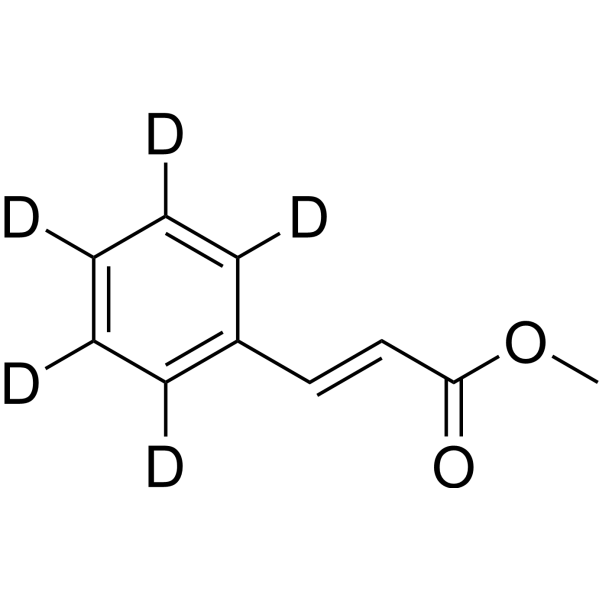
Synonyms: Methyl(E)-3-phenylpropenoate-d5
Methyl (E)-cinnamate-d5 is the deuterium labeled Methyl (E)-cinnamate . Methyl (E)-cinnamate (Methyl (E)-3-phenylpropenoate) is a natural flavor compound with anti-inflammatory properties found in Alpinia katsumadai Hayata. Methyl (E)-cinnamate induces apoptosis via reduced anti-apoptotic protein expression, increased TUNEL-positive cells, and apoptotic morphological changes. Methyl (E)-cinnamate can be used for the research of abnormalities of osteoblast function in bone diseases .
loading...
    loading...
Cat. No.: HY-N17557
CAS No.: 343326-65-8
Synonyms: Schizarin D
Schizanrin D (Schizarin D) is a C18 Dibenzocyclooctadiene lignin. Schizanrin D can be derived from dried stems of Kadsura matsudai. Schizanrin D inhibits HBeAg production. Schizanrin D is inactive in vitro against HIV replication .
loading...
    loading...
  • 1

